

Every hero needs a villain, and Giant Haystacks was the only wrestler who could match up to Big Daddy.
Shirley Crabtree, Big Daddy, was the king of British wrestling, but he’d have been nothing without his former partner and long-time rival in the opposite corner to bump bellies with.
Billed at nearly seven feet tall and close to 50 stone, Haystacks terrified children all over the country and made grown men think twice. He was as close to a real-life monster as wrestling ever got.
The man behind the character was anything but. The real Giant Haystacks was intelligent, a pacifist, and happy to talk anyone’s ear off about the time he became friends with Paul McCartney.
Giant Haystacks at a glance
- Real name: Martin Austin Ruane
- Born: 10 October 1946, Camberwell, London; raised in Salford
- Billed height: 6ft 11in
- Heaviest: 49st 13lb
- Debut: 1967, as Luke McMasters
- Greatest rival: Big Daddy
- In WCW: “Loch Ness”, 1996
- Died: 29 November 1998, aged 52
From Luke McMasters To Giant Haystacks
Haystacks was born Martin Ruane in Camberwell, London, in 1946, to an English mother and an Irish father, and weighed more than 14lb at birth. The family moved to Salford when he was three. There were stories of a seven-foot Irish grandfather, but that was probably a myth.
School didn’t suit him, but the wrestlers who knew him always talked about how bright he was. Robbie Brookside said the pair would talk for hours about religion and politics. Haystacks saw wrestling as a form of self-expression, and grew to love it.
He left school at 14 to work building motorways, and used his size as a bouncer. It was while working the doors that he was persuaded to try wrestling, and in 1967 he debuted for the Wrestling Federation of Great Britain as “Luke McMasters”, billed as an Irishman.
His wrestling ability was limited, but his size got him noticed. Brian Dixon of All Star Wrestling saw money in him, and borrowed the name of the American giant Haystacks Calhoun. First billed as Haystacks Calhoun, he soon became Giant Haystacks, and a big draw on the opposition circuit. Little or no footage survives from those years, because Joint Promotions had the TV rights.
Big Daddy vs Giant Haystacks
Haystacks’ television career was tied to Big Daddy from start to finish.
Max Crabtree brought him into Joint Promotions in 1975, and his first TV appearances came as Big Daddy’s tag team partner. The two giants debuted as a team in Southport that summer, crushing their opponents in a quick, dominant match. Haystacks was “only” around 30 stone at the time, and in decent shape. Daddy, already in his mid-forties, was not.
The fans soon picked a favourite. Big Daddy, whose brother Max booked the shows, was cheered, especially after he pulled off Kendo Nagasaki’s mask on TV in 1975. In 1977 the pair split, Daddy became the hero, and the feud that would define British wrestling began.
Wembley Arena · 1981
Big Daddy
vs
Giant Haystacks
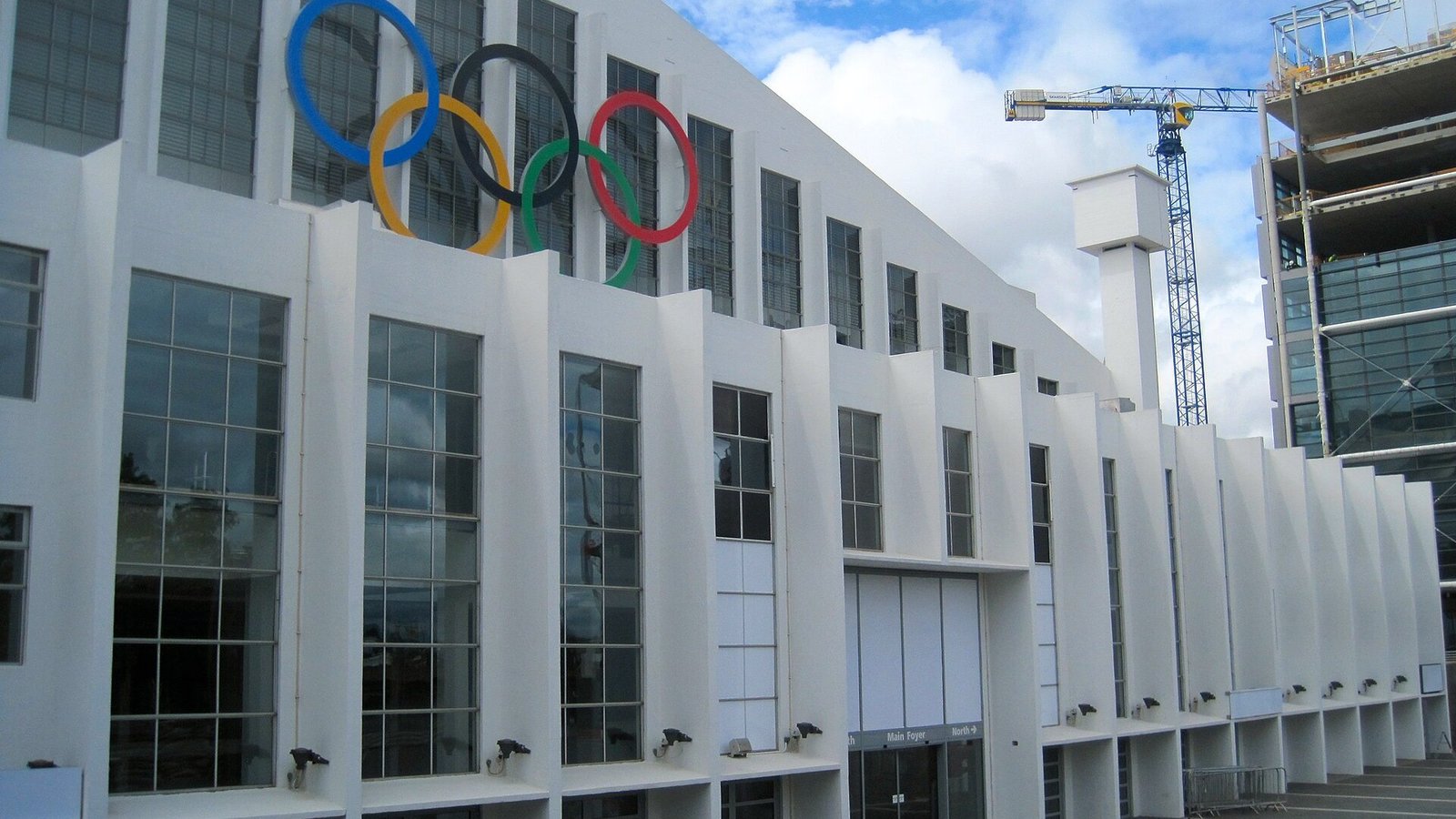
Their most famous clash came at Wembley Arena in 1981, a match said to have been watched by millions. By then, both men were limited in the ring. Big Daddy won in a matter of minutes. It wasn’t a good match, but it didn’t matter. Their star power was at its peak, and the feud carried on, on and off, for more than a decade.
A Household Name
As the years went on, both men got worse in the ring but even bigger as stars. Most of their later meetings were tag matches, with smaller wrestlers taking the punishment before the big men tagged in for a few belly bumps to send the crowd home happy. Their partners were a who’s who of British wrestling, including William Regal, Fit Finlay, the Dynamite Kid and the British Bulldog.
Big Daddy had the TV shows, books and records, but Haystacks was everywhere too. He did TV interviews and even an advert for Skips crisps, in which a wrestler bounced off his belly while he declared, “Dainty, aren’t they?”
He made it onto the big screen as well, with a small part in the Oscar-winning Quest for Fire. His biggest role came alongside Paul McCartney in Give My Regards to Broad Street in 1984. The film flopped, but Haystacks and McCartney became lifelong friends, and McCartney was a genuine fan.
He Went To WCW And Nearly Faced Hulk Hogan
By the mid-1990s, British wrestling had all but collapsed. ITV had dropped it in 1988, Big Daddy had retired in 1993, and promotions were closing left and right. Haystacks was largely retired and working the doors again.
Then WCW called. It wanted a giant new villain for Hulk Hogan, and Haystacks jumped at the chance, despite hating long-haul flights. It wasn’t his reputation that got him the job, since nobody in America knew who he was. It was his sheer size.
He debuted in January 1996 as “Loch Ness”, a member of Kevin Sullivan’s villainous Dungeon of Doom, and was set up for a feud with Hogan. But it came far too late. He was nearly 50 stone and nearly 50 years old, and could barely move. After only a handful of short matches, his last was a quick loss to The Giant, later WWE’s Big Show, at Uncensored in March 1996.
Soon after, he was diagnosed with lymphoma and returned home to Britain.
Giant Haystacks Died In 1998, But His Legend Lives On
Back home, Haystacks still made the odd public appearance, his huge frame making him instantly recognisable. He was cared for by his wife at their home in Prestwich, Greater Manchester, until he died on 29 November 1998, aged 52. Big Daddy had died the year before.
The country mourned. Their matches may have been terrible, but the childhood joy of watching those two men collide was something nobody could take away.
Nearly thirty years on, his legend has only grown. Whenever WWE or AEW come to Britain, wrestlers are asked about Big Daddy and Giant Haystacks, even though many of them weren’t born when the pair were on TV. With every retelling, Haystacks gets a little taller and a little wider.
There’s no doubt he is Britain’s most famous wrestling villain, beaten for fame only by Big Daddy himself. Nobody could replicate his size or his presence, and nobody ever will.
Read about the golden age of British wrestling, when Haystacks and Daddy ruled Saturday afternoons.